


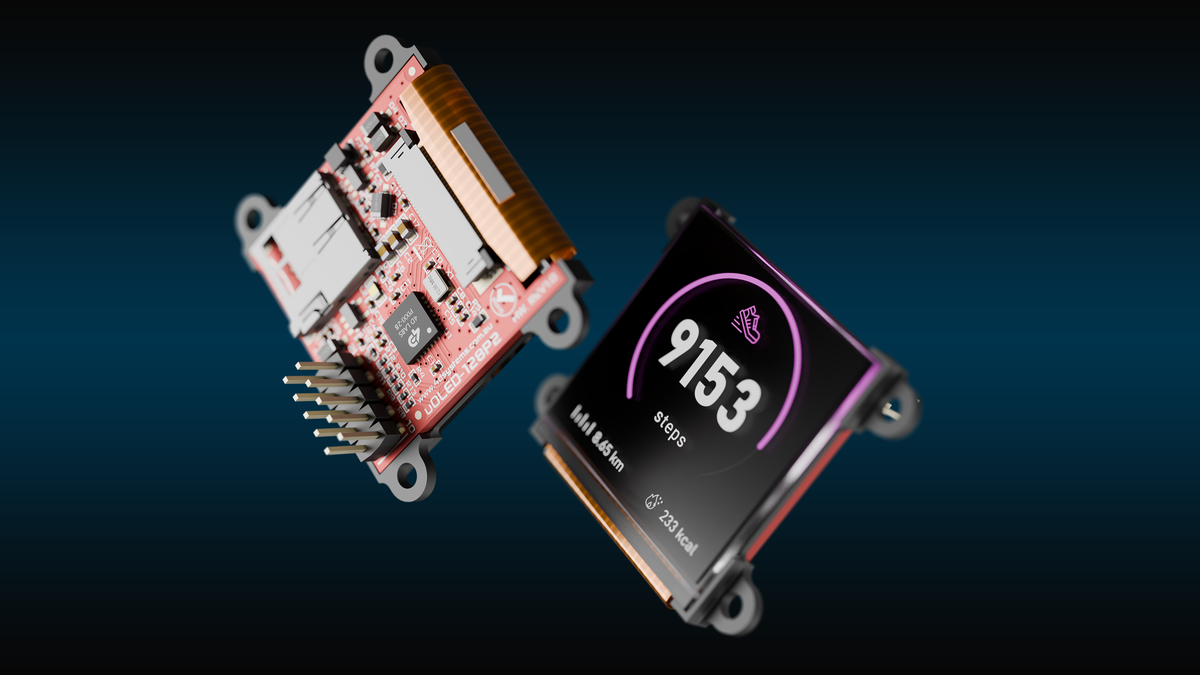
microOLED Series
Intelligent OLED Displays. Vivid visuals, powerful graphics processor, multiple sizes, easy UI development.
The microOLED Series features vibrant PMOLED displays in 0.96”, 1.5”, and 1.7” sizes, powered by the advanced and powerful PIXXI-28 processor.
These compact modules offer impressive graphics, versatile I/O, and enhanced storage options. They are ideal for embedded applications with true-to-life colours and cutting-edge technology for superior performance.


Explore the range
Filters
3 products
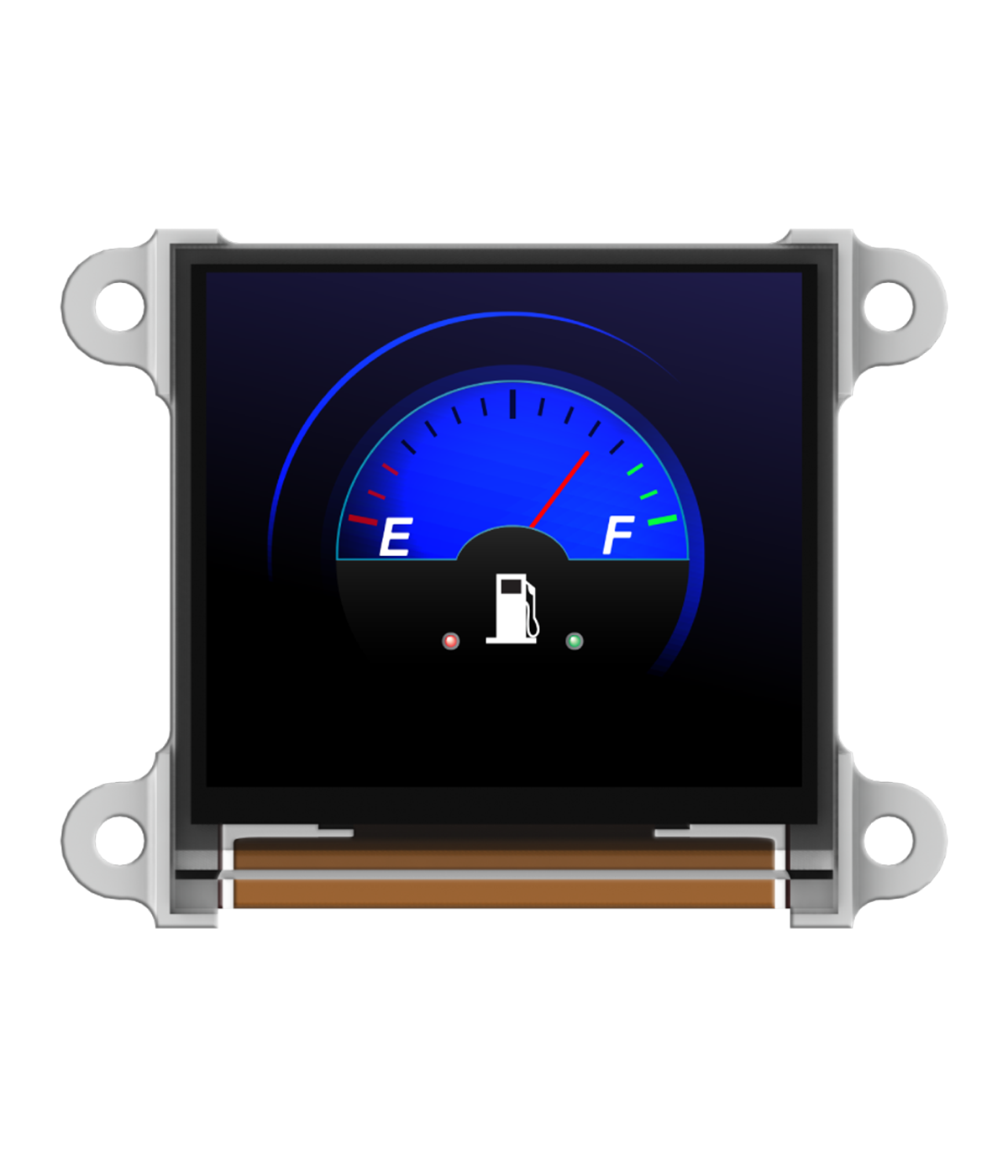


microOLED Series Display Modules
Multiple Display Sizes
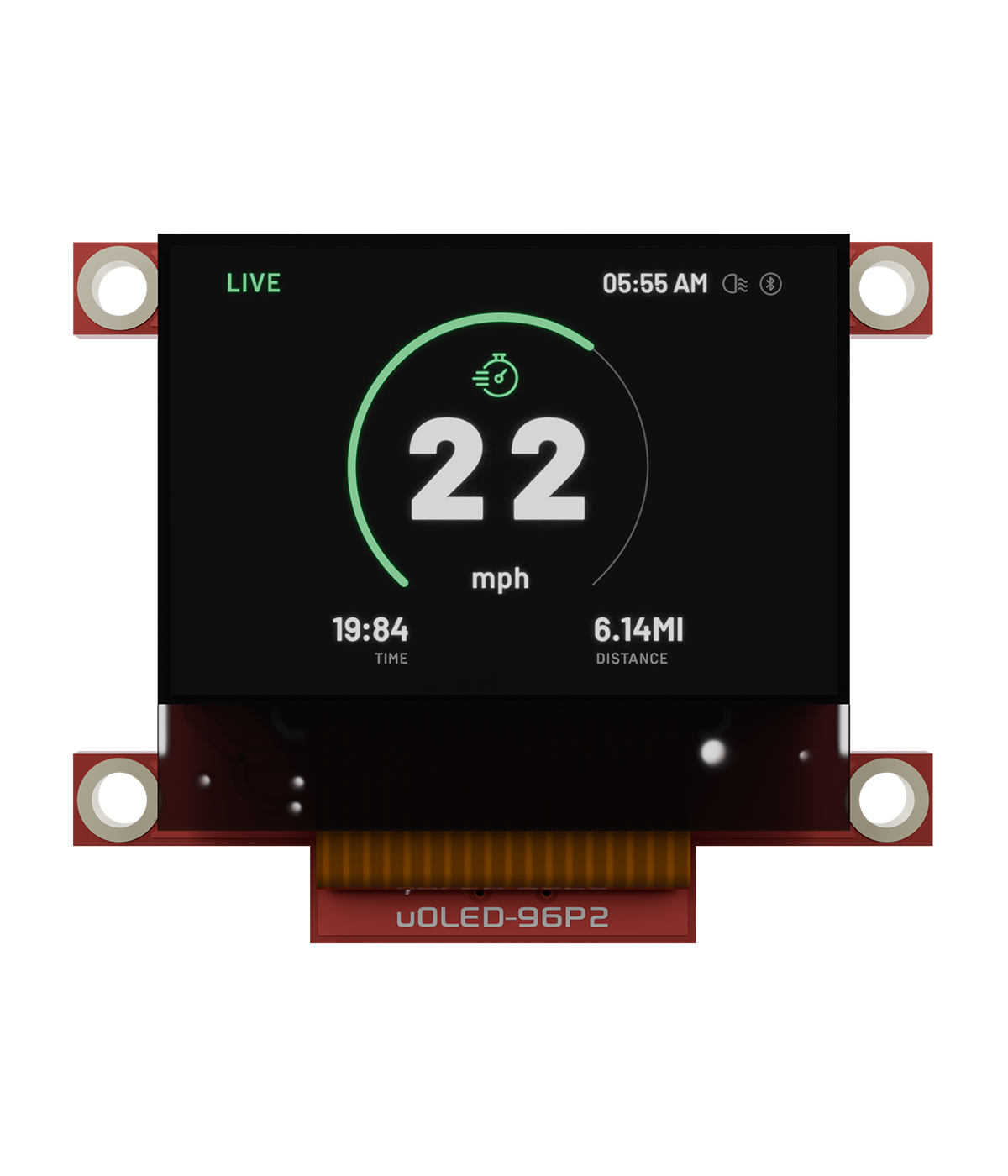
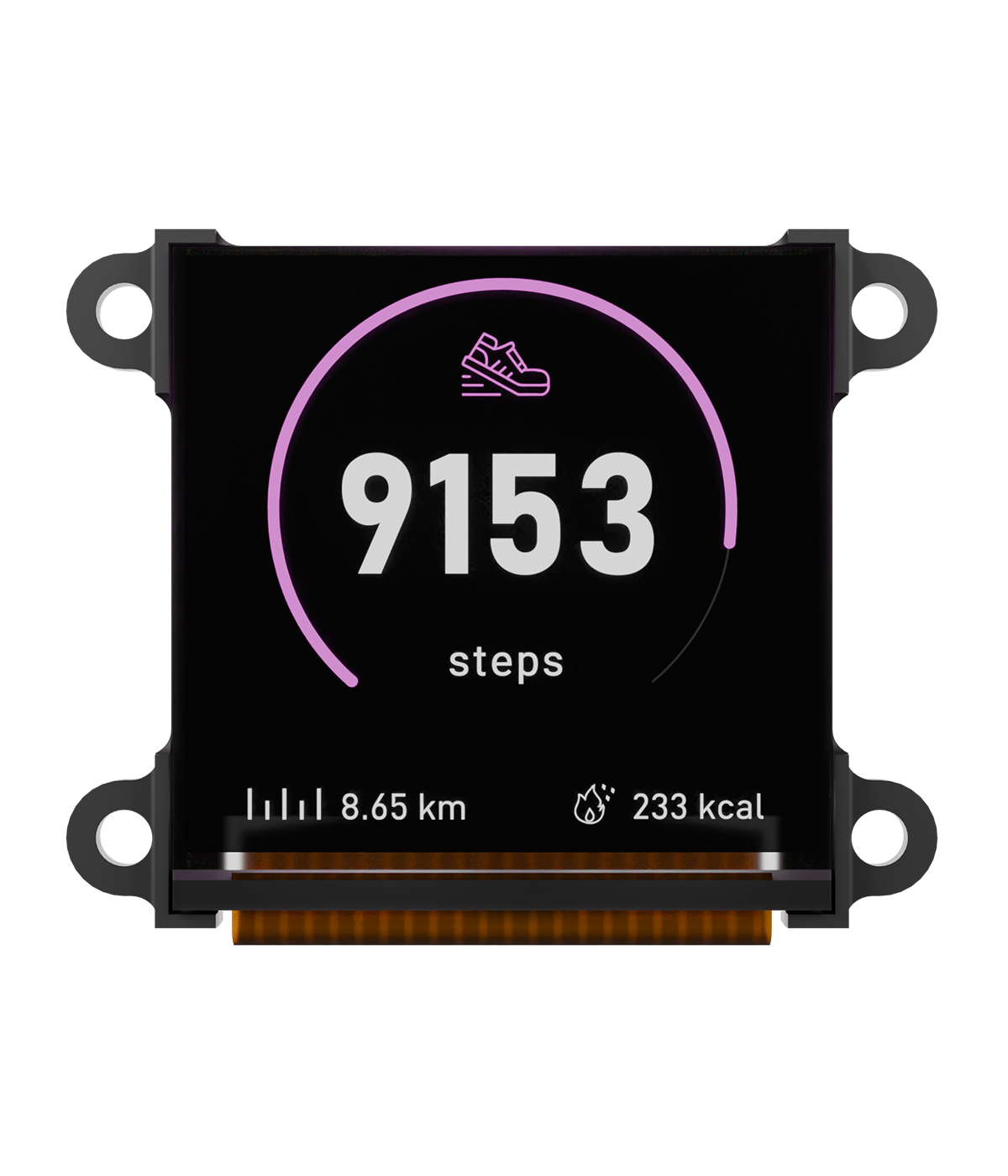
The 4D Systems microOLED series offers three display sizes ranging from 0.96″ to 1.7″, with resolutions from 96×64 to 160×128 pixels.
Packed in a compact design with sizes ranging from 32.7×26.7×13.2 to 52.1 x 36.0 x 13.8 mm, these displays support both portrait and landscape modes, providing versatile options for creating user-friendly graphical interfaces in various embedded applications.

Vibrant PMOLED Technology
PMOLED (Passive Matrix OLED) technology delivers unparalleled image quality with true-to-life colors and nearly 180° viewing angles.
These displays are energy-efficient, lightweight, and do not require backlighting, making them ideal for a wide range of applications.
Whether you need a display for a consumer gadget or an industrial equipment, PMOLED technology ensures your visuals are sharp and vibrant.

Powered by the PIXXI-28 Processor
The PIXXI-28 processor, at the heart of the MicroOLED series, is designed for graphics-intensive applications. It offers impressive graphics power for rendering stunning images, animations, and video clips effortlessly.
Compatible with 4D Systems Workshop4/5 IDE, it streamlines GUI development. The processor also provides versatile I/O options, including analog input, Dallas 1-wire sensor capability, audio generation, and digital I/O, along with enhanced storage options via microSD card slot or 16MB serial flash.

Seamless on any platform
The uOLED Series offers seamless compatibility with any platform featuring a Serial UART (TX/RX) interface using Serial (SPE) or ViSi-Genie protocols. Dedicated adaptors facilitate connection to popular platforms like Arduino and Raspberry Pi, allowing straightforward integration into various projects.
This setup enables developers to harness the impressive graphics power of the uOLED Series, enhancing projects with vibrant, interactive displays on multiple platforms.

Easy UI Development
Workshop4 is a comprehensive IDE tailored for the 4D Systems graphics processors. It offers multiple development environments—Designer, ViSi, ViSi-Genie, and Serial—to accommodate different project requirements. Workshop4 enables the rapid creation of advanced graphical user interfaces with support for touch input and multimedia features. Its drag-and-drop interface and extensive widget libraries simplify UI design, while the integrated 4DGL programming language allows for detailed control and customization.
This software streamlines the development process, facilitating seamless integration of microLCD displays into embedded systems and enhancing overall application functionality.

The 4D Systems microOLED series offers three display sizes ranging from 0.96″ to 1.7″, with resolutions from 96×64 to 160×128 pixels.
Packed in a compact design with sizes ranging from 32.7×26.7×13.2 to 52.1 x 36.0 x 13.8 mm, these displays support both portrait and landscape modes, providing versatile options for creating user-friendly graphical interfaces in various embedded applications.
PMOLED (Passive Matrix OLED) technology delivers unparalleled image quality with true-to-life colors and nearly 180° viewing angles.
These displays are energy-efficient, lightweight, and do not require backlighting, making them ideal for a wide range of applications.
Whether you need a display for a consumer gadget or an industrial equipment, PMOLED technology ensures your visuals are sharp and vibrant.
The PIXXI-28 processor, at the heart of the MicroOLED series, is designed for graphics-intensive applications. It offers impressive graphics power for rendering stunning images, animations, and video clips effortlessly.
Compatible with 4D Systems Workshop4/5 IDE, it streamlines GUI development. The processor also provides versatile I/O options, including analog input, Dallas 1-wire sensor capability, audio generation, and digital I/O, along with enhanced storage options via microSD card slot or 16MB serial flash.
The uOLED Series offers seamless compatibility with any platform featuring a Serial UART (TX/RX) interface using Serial (SPE) or ViSi-Genie protocols. Dedicated adaptors facilitate connection to popular platforms like Arduino and Raspberry Pi, allowing straightforward integration into various projects.
This setup enables developers to harness the impressive graphics power of the uOLED Series, enhancing projects with vibrant, interactive displays on multiple platforms.
Workshop4 is a comprehensive IDE tailored for the 4D Systems graphics processors. It offers multiple development environments—Designer, ViSi, ViSi-Genie, and Serial—to accommodate different project requirements. Workshop4 enables the rapid creation of advanced graphical user interfaces with support for touch input and multimedia features. Its drag-and-drop interface and extensive widget libraries simplify UI design, while the integrated 4DGL programming language allows for detailed control and customization.
This software streamlines the development process, facilitating seamless integration of microLCD displays into embedded systems and enhancing overall application functionality.
Available Models


Comparing uOLED P2 and G2 Series
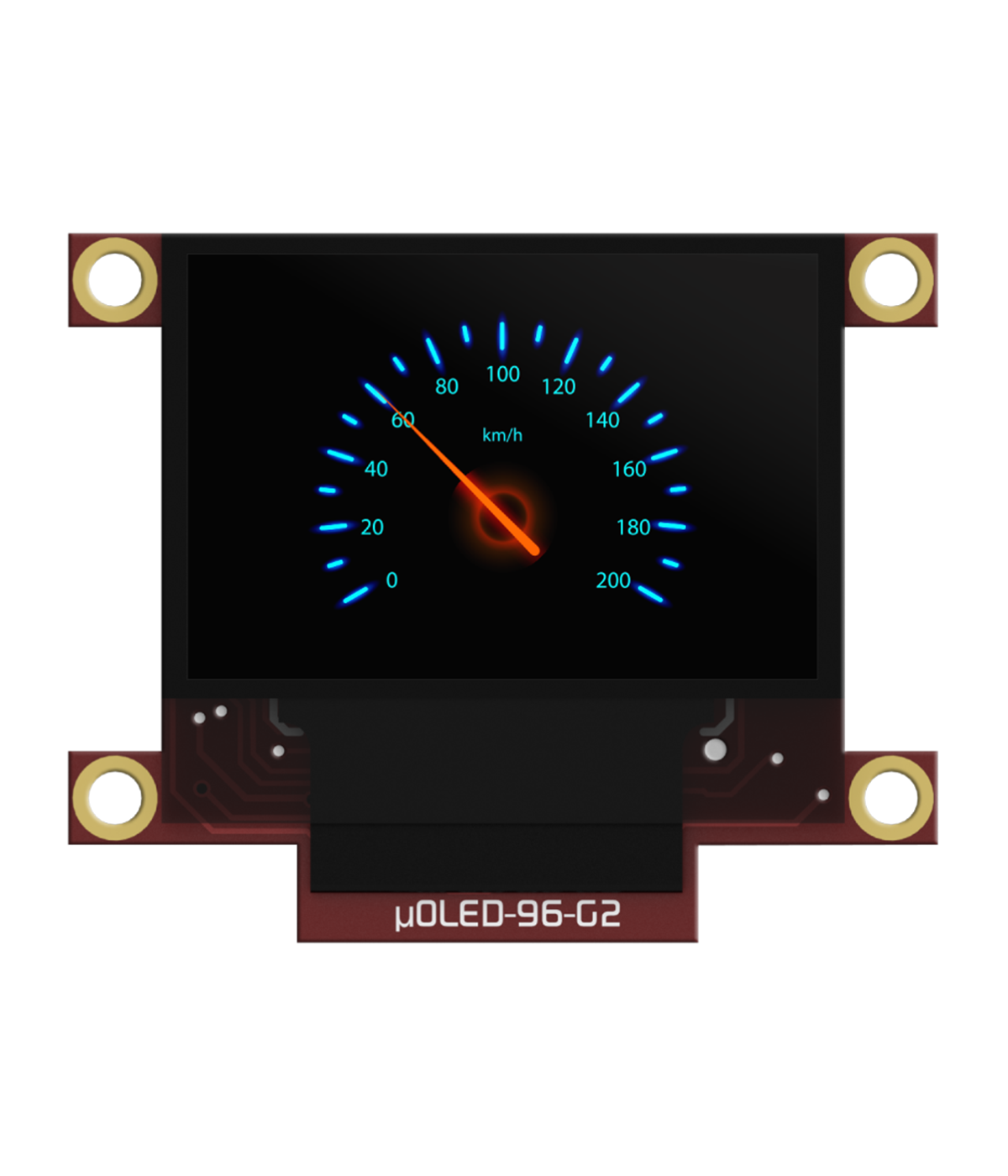
The uOLED P2 series, powered by the advanced PIXXI-28 processor, offers significant enhancements over the G2 series, which uses the GOLDELOX processor.
The P2 series delivers superior graphics performance, increased memory capacity, faster processing speeds, and additional features like ViSi-Genie capability. These improvements make the P2 series ideal for new designs. Conversely, the G2 series, while still supported and manufactured as long as there is demand, is not recommended for new projects due to its older technology.
The new P2 series has been meticulously designed to be mechanically compatible with the G2 series, facilitating a seamless transition for existing designs seeking an upgrade.


WORKSHOP4 IDE
Tailored Development for 4D Processors and Modules

Workshop4 IDE is a comprehensive software development environment specifically designed for the 4D family of processors and modules. Whether you are a seasoned developer or just starting out, Workshop4 provides the perfect platform tailored to your development needs. This versatile IDE supports all core development processes, including code writing, compiling, linking, and transferring code to your target device.
Workshop4 IDE let you choose from four distinct environments—Designer , ViSi, ViSi-Genie and Serial—each catering to different development preferences and project specifics. This flexibility allows developers to select the most suitable environment for their tasks.
Workshop4 IDE is your go-to development companion in the 4D ecosystem, simplifying complex tasks and enhancing productivity through its user-friendly and versatile design. Whether coding manually or designing visually, Workshop4 elevates your development experience to new heights.
microOLED Accessories

The uUSB-PA5-II is a compact, cost-effective USB to Serial-TTL UART bridge adaptor based on the Silicon Labs CP2104 chipset.
Designed for easy integration with 4D Systems modules, it supports data rates up to 2 Mbps, USB 2.0 full-speed communication, and offers 3.3V/5V tolerant signals. Ideal for both prototyping and production, it features a standard mini USB connection.
uUSB-PA5-II
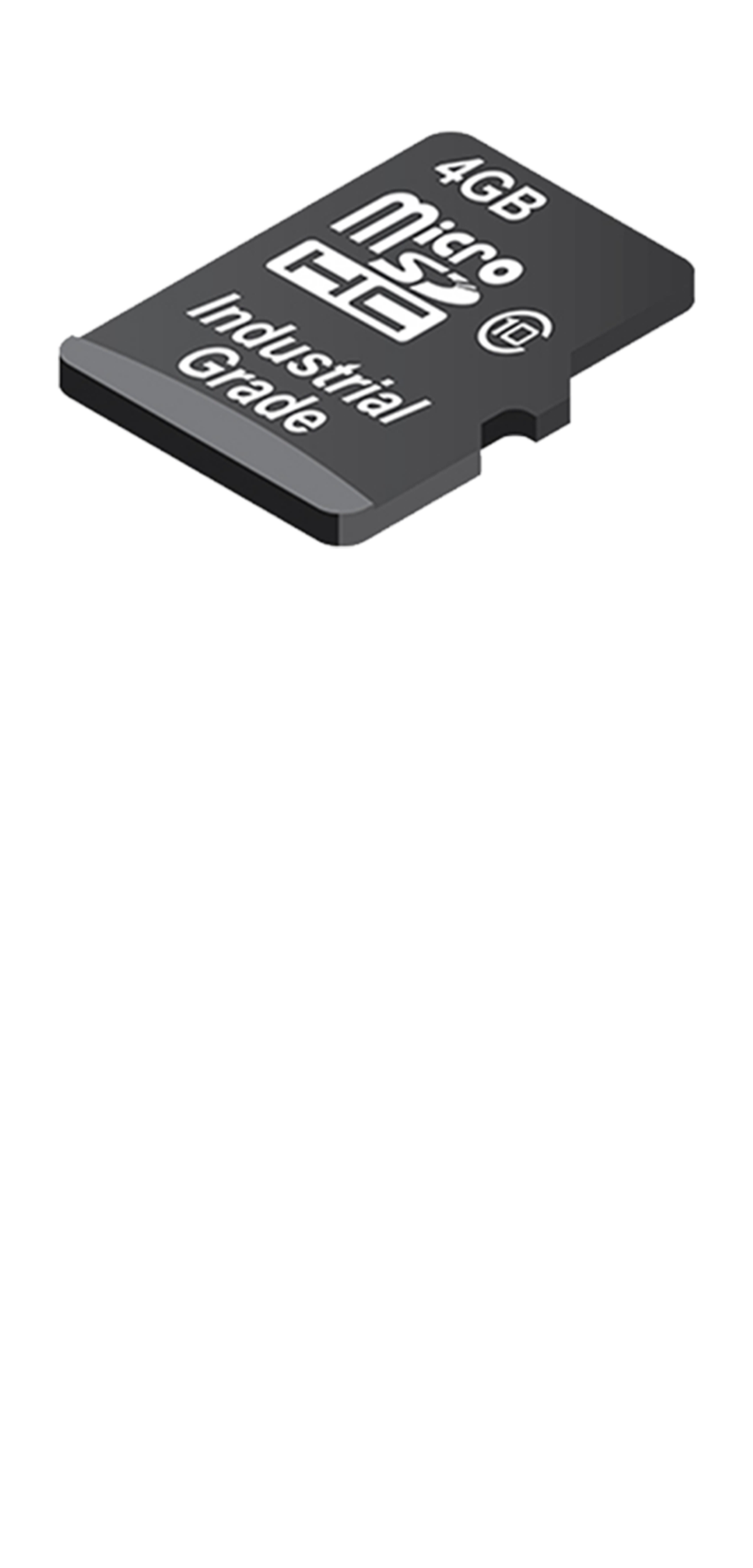
Designed for critical embedded environments, this 4GB Industrial Grade micro SD Card offers exceptional reliability, advanced firmware protection, and SPI compatibility. Ideal for 4D Systems' intelligent displays, it prevents Read Disturb errors and ensures data integrity under high read/write demands.
With industrial temperature tolerance and Phison-certified performance, it’s the recommended storage solution for graphics, logging, and robust applications.
uSD-4GB-Industrial
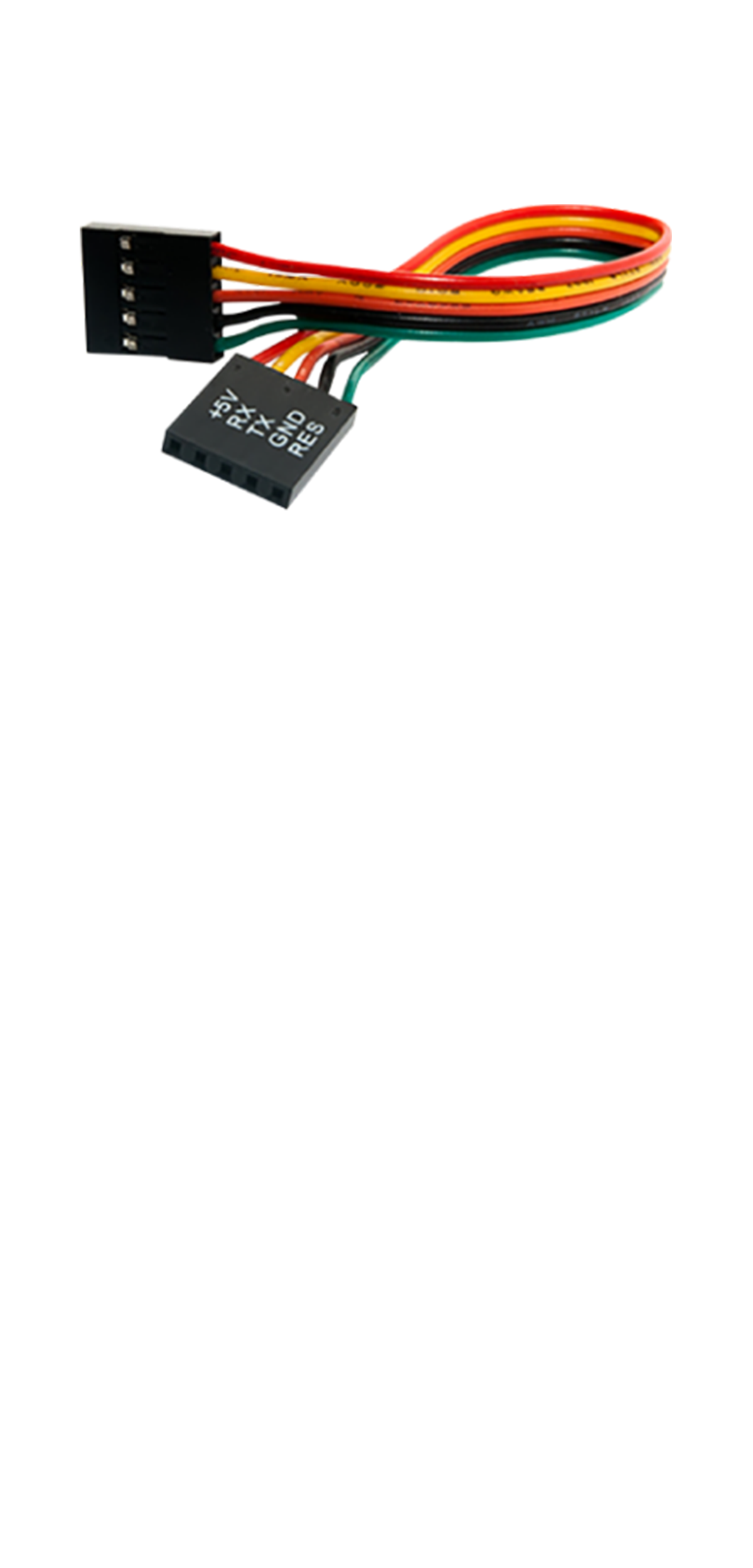
Enhance your development setup with the 5 5-pin ribbon cable from 4D Systems. Designed for compatibility with our intelligent display modules, this 5-way female-to-female ribbon cable, accompanied by a male-to-male adapter, offers flexible and reliable serial communication.
Ideal for prototyping and integration, it ensures seamless connections between your display modules and host systems, streamlining your development process.
5 Pin Ribbon Cable
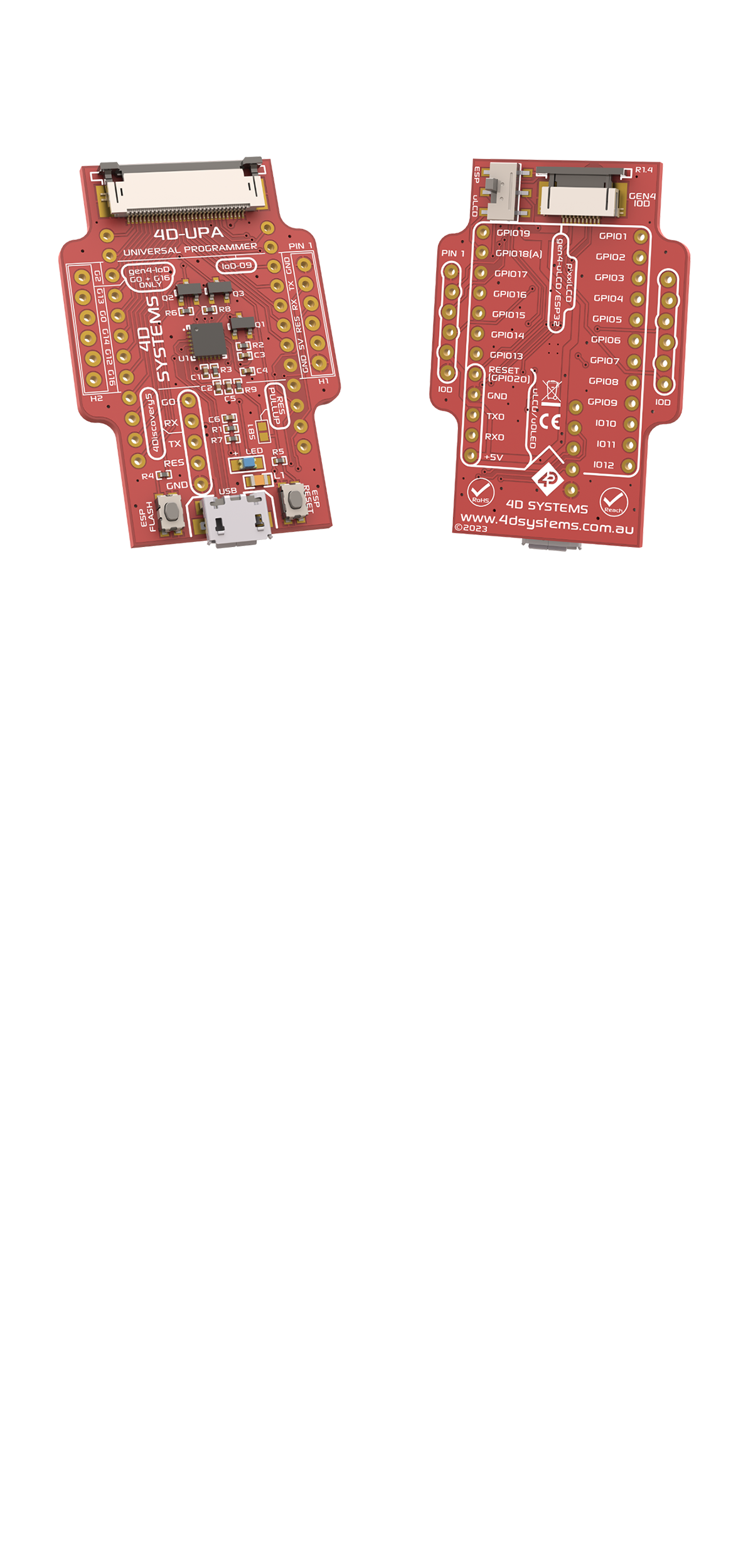
The 4D-UPA (Universal Programmer Adaptor) provides a reliable interface for programming, updating, and configuring 4D Systems display modules and processors.
Featuring a 30-way, 0.5mm pitch FPC connector, it ensures high-speed, stable communication with Workshop4 IDE, making it ideal for development, prototyping, and volume production environments.
4D-UPA
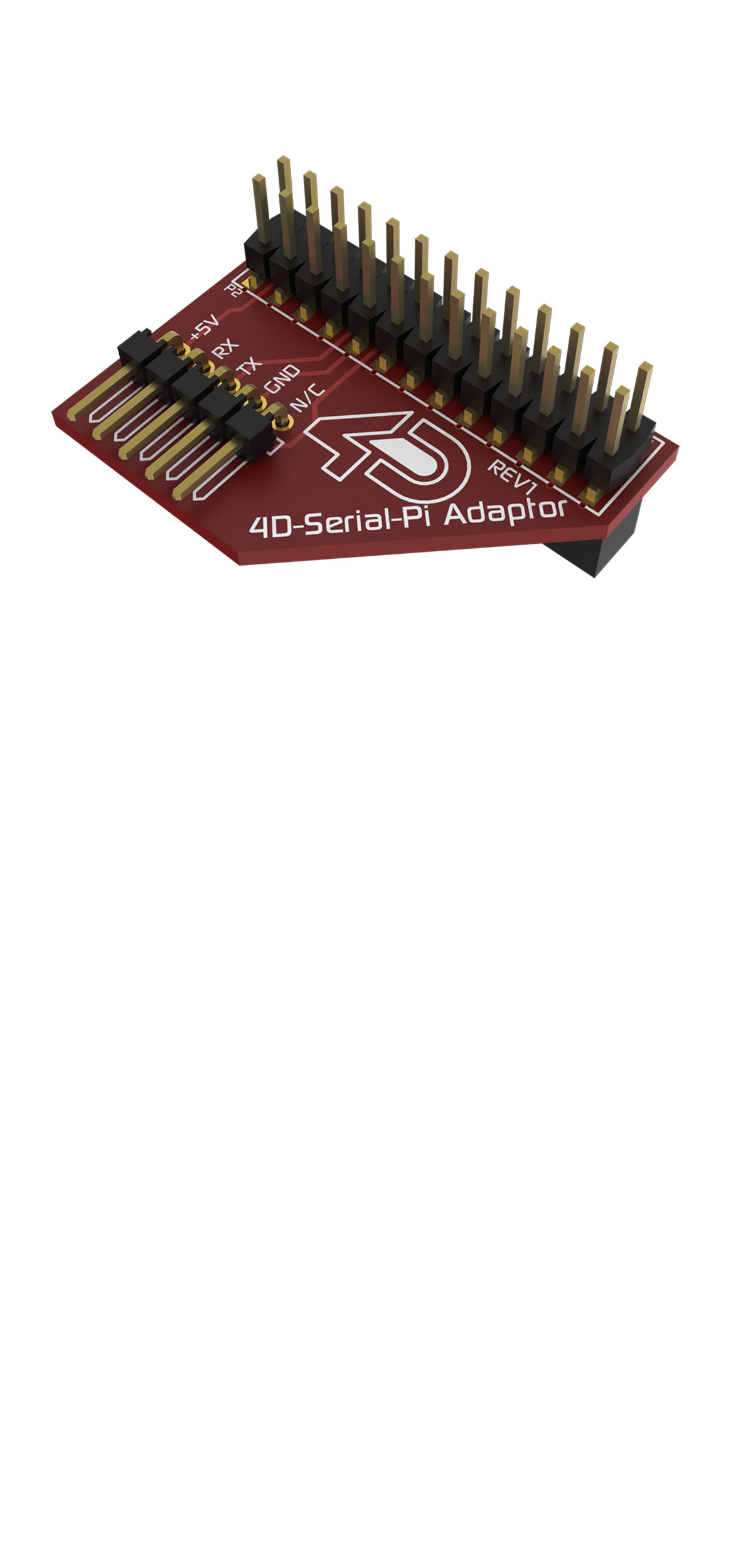
The 4D Serial Pi Adaptor provides a simple, direct serial interface between Raspberry Pi boards and 4D Systems display modules using a 5-pin connection.
Featuring a pass-through header design, it maintains compatibility with other Raspberry Pi accessories. Supplied with jumper cables, it supports 5V power and works with all Raspberry Pi models.
4D Serial Pi Adaptor
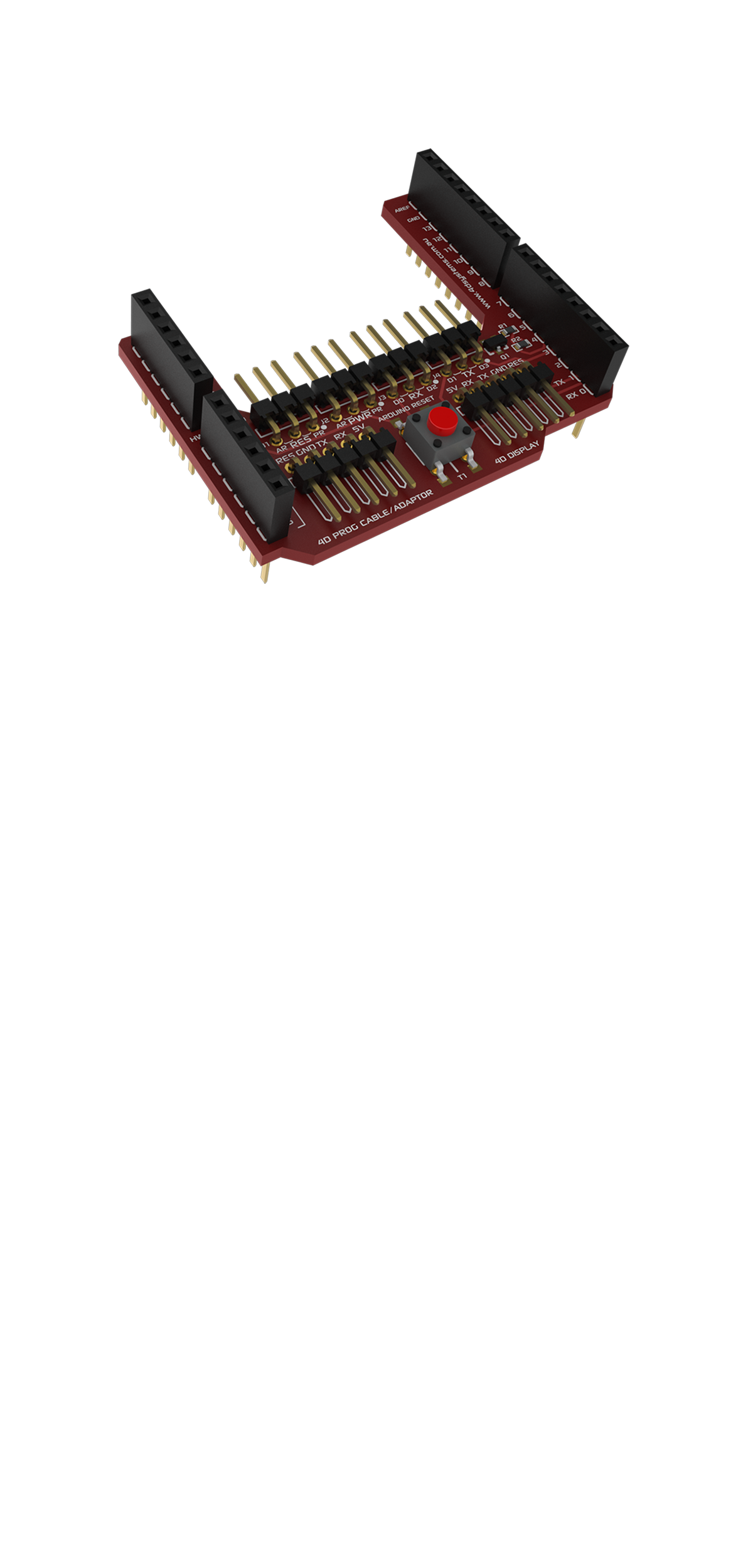
The 4D Arduino Adaptor Shield is designed to provide a convenient interface for attaching gen4 range display modules to the Arduino platform without using jumper wires on the Arduino headers.
4D Arduino Adaptor Shield II

Unveiling the Enhanced microOLED PIXXI Series
Introducing the uOLED-96P2, uOLED-128P2, and uOLED-160P2—now with the PIXXI-28 processor. These upgraded microOLEDs offer vivid colors, faster performance, and easy GUI design with ViSi-Genie support.


Frequently Asked Questions
Find quick answers about our display modules, embedded integration, customization capabilities, and system compatibility.

How do I choose the right display module for my project?
Start by identifying the demands of your product environment: required screen size, touch capability, operating conditions and UI complexity. Our consistent form-factor families allow you to select a module that fits your constraints today and upgrade performance later without redesigning your enclosure or PCB. Our documentation hub provides comparison tables to assist selection.
What is the difference between a smart display and a host-driven display?
Smart displays include an onboard processor that handles graphics, widgets, UI logic and drawing commands internally. This reduces load on your host MCU, simplifies code and often shortens development time dramatically. Host-driven modules require the host MCU to manage everything, which may be appropriate for minimal UIs but introduces more integration work.
Can I upgrade processors without changing my enclosure or PCB?
Yes. Our architecture is deliberately designed around footprint consistency. Most display families maintain identical mechanical and electrical footprints across multiple processor types, enabling generation-to-generation performance improvements without mechanical redesign.
Do you offer non-touch and touch options?
Yes. Many display families provide variants for non-touch, resistive-touch and capacitive-touch configurations. Capacitive-touch variants are recommended for modern, responsive UI experiences.